
A museum visit gives an Arusha day a clear starting point. It also changes what you notice afterward: a garden becomes part of a natural-history collection, while the name of a city street can open a question about Tanzania’s public life. Two institutions are especially useful to understand separately: the National Natural History Museum and the Arusha Declaration Museum.
They are different places with different subjects. Choose one that matches your interests, or give each its own part of the day. A rushed circuit between entrances is less rewarding than leaving enough time to read, ask a question and follow an unfamiliar subject. This guide is a way to shape that visit; current opening arrangements and exhibition access should come from the museum itself.
Begin with natural history
The National Natural History Museum is in Arusha’s Boma complex. It offers a way into the natural world alongside the city’s museum gardens. Approach the buildings as a working museum, with collections and interpretation, rather than treating the architecture alone as the attraction.
Give yourself a simple question to carry through the galleries. What distinguishes a specimen from a living habitat? How do researchers build an account of a place from fragments? Which objects ask you to look at a very small detail? You do not need specialist knowledge to make a visit meaningful. Reading a few labels carefully can be more useful than trying to remember every display.
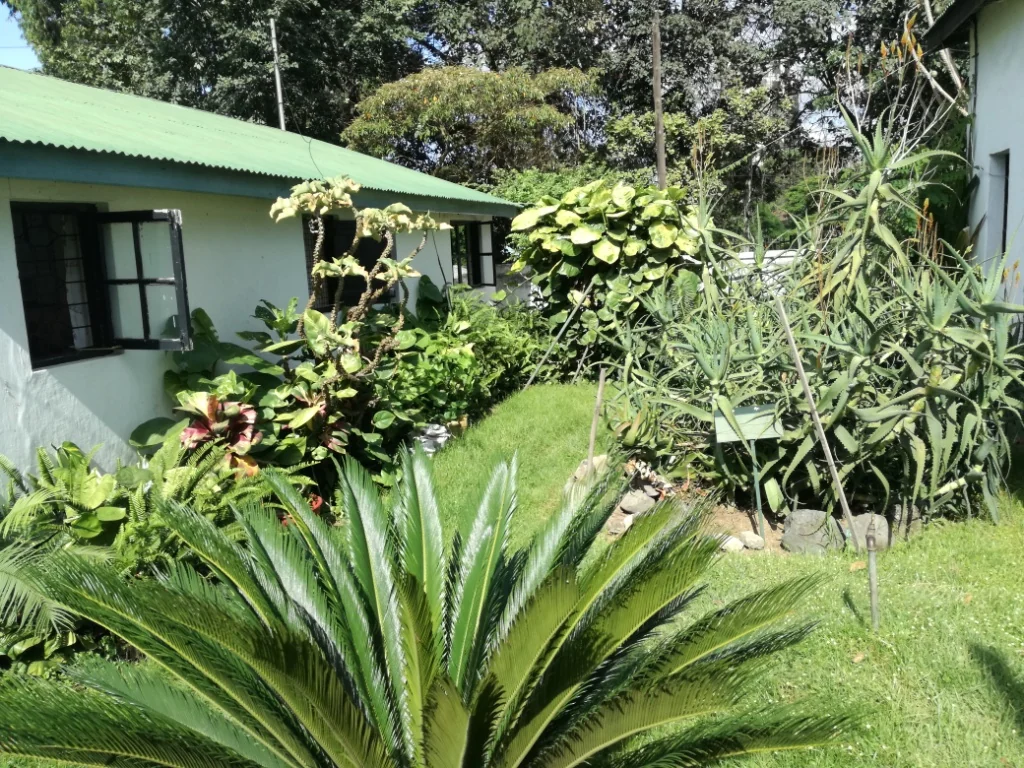
Outside, pause before returning to the street. The museum setting allows the change from rooms to gardens to be part of the visit. Photograph labels only where allowed, and keep notes if you want to look up a name later. The garden photograph on this page records a particular moment; it does not promise a current route or unrestricted access to every part of the grounds.
Follow the story of the Arusha Declaration
The Arusha Declaration Museum is in the Kaloleni area. It examines Tanzania’s political and social history, including the policy of socialism and self-reliance associated with the Arusha Declaration. The institution became a national museum in 1977. The International Council of Museums’ Tanzania handbook explains its setting and historical purpose.
A useful approach is to follow the sequence of events before concentrating on individual personalities. Notice when a document was written, who produced it and what audience it addressed. Historical interpretation can contain both aspiration and argument. Leave room for complexity rather than turning a national story into a decorative travel anecdote.
Choose a visit that suits your day
| Your interest | A useful starting point | A question to take with you |
|---|---|---|
| Natural history | The Boma museum | How does this collection explain the natural world? |
| Public history | The Declaration Museum | How did this policy affect ideas about national life? |
| A broader city day | One museum and a meal | What would I like to understand more closely? |
Keep the comparison practical. The table describes subjects, not a ranking. A family with an interest in insects may make a different choice from a reader of political history. If a particular exhibition is the reason for your visit, ask whether that exhibition is accessible before setting out.
Leave room around the visit
- Confirm the museum’s location and visitor arrangements.
- Ask about the parts of the collection you most want to see.
- Check photography, bags and step-free access if these affect your visit.
- Choose a manageable route from your accommodation.
- Leave time for lunch or coffee after the galleries.
For a group, agree on one meeting point and avoid an itinerary that makes everyone hurry at the same pace. A short rest can be useful between two different subjects. If you use a guide, explain whether you want historical context, practical orientation or both; the title of a city tour alone does not describe its emphasis.
Continue with food and coffee in Arusha, or use the city-day planning guide to fit the museum into a realistic day. Nearby park trips are a separate commitment and deserve a separate plan.